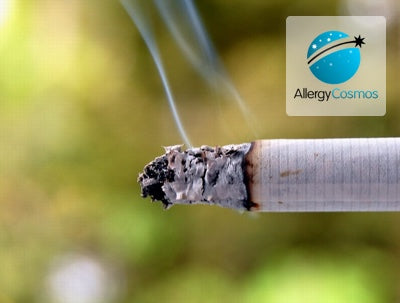
Environmental tobacco smoke is the smoke emitted from cigarettes, pipes and tobacco. Now that smoking has been banned in so many public places, pollution through secondhand smoke is not a problem anymore in most pubs, restaurants or clubs. Nevertheless, indoor air pollution due to cigarette or cigar smoke is still a major concern for many people within their home. If you have a neighbour that is a smoker or live near a place where people smoke (such as the garden of a pub), chances are that you will be exposed to a significant amount of chemical pollution from secondhand smoke and you might be interested in finding the best air purifier for cigarette smoke.
Environmental tobacco smoke such as second-hand smoke is a potent cocktail of over 4000 different substances and chemicals - some in particulate form (over a wide range of particle sizes from over 10 microns to as small as 0.01 microns) and some in the form of gas molecules (which are even smaller). Over fifty of these are known to cause cancer and, of course, ETS is also bad for the heart and lungs. You’re probably well aware of the health hazards of cigarette or cigar smoke, but here are a few reminders:
- Tobacco smoke also causes lung problems and makes kids more prone to bronchitis
- Tobacco smoke triggers asthma attacks in many and makes the condition worse in the long term
- If you suffered with asthma as a child and ‘grew out’ of it, it is likely to reappear if you take up smoking as an adult
Added to this, stale cigarette or cigar smoke creates bad odours which linger long after the smoking has stopped. It clings to your furniture, curtains and carpets. There are two types of environmental tobacco smoke - the mainstream, which is the smoke the person smoking exhales, and the sidestream, which is the smoking coming from the burning end of a cigarette, pipe or cigar. Sidestream smoke actually has higher concentrations of toxic compounds than mainstream smoke does. Sidestream smoke tends to contain smaller particles, the ones most likely to lodge deep in your lungs when inhaled. In a smoke-filled room, 85% of cigarette or cigar smoke is of the sidestream variety, putting the health of the non-smokers present at risk.
So what can you do to protect your health from cigarette and cigar smoke? A good smoke air cleaner can be the most effective step in controlling cigarette smoke in your home. To effectively capture and retain smoke pollution, a smoke air cleaner has to fulfil a couple of general and specific criteria.
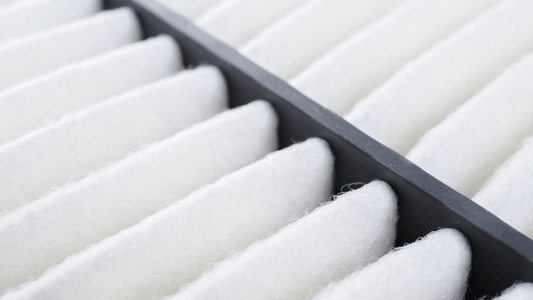
As with all air purifiers, you want to make sure that the cleaner uses a high-efficiency filter, that the filtration system is more or less leakage free, and that the unit creates enough clean air for the room size that it is used in. The particle pollution of tobacco smoke is best captured by a HEPA or HyperHEPA filter because these filters have the best filtration efficiency without obstructing the airflow much.
The chemicals and odours that are produced by cigarette smoke can be controlled by a filter that consists of a mix of activated granular carbon and activated alumina which is impregnated with potassium permanganate. Activated granular carbon can remove gas molecules and trap them in its porous carbon structure through an absorption process. Activated carbon does that especially effectively for molecules with a high molecular weight. (It is important that it is granular and not carbon dust). Gas contamination with a low molecular weight is best controlled through chemically activated alumina, which is made out of activated alumina (AI203), which is impregnated with potassium permanganate (KMn04). This material binds the molecules and destroys them through an oxidation process.
So when buying a smoke air cleaner, make sure to check what material the air purifier is using to actively capture and retain the particle and gas molecules that are produced through smoking. You also want to make sure that an adequate amount of the smoke controlling material is being used.
The IQAir GC MultiGas is generally acknowledged as the best air purifier for smoke and chemical pollution. It can effectively trap particulate pollution and adsorb gaseous molecules in ETS. The high-efficiency particulate (HEPA) filter traps 99% of particles down to 0.3 microns and the system also contains 17 pounds of gas phase filter media in four cartridges to remove the gaseous element.